July in Phoenix is a bad month for most skin treatments. UV index 11, heat that triggers pigment, and nobody wants to be pink for three days when they have a pool to be at.
So the useful question is not what is the best treatment. It is what actually works when you cannot take downtime and cannot risk sun exposure on healing skin.
What summer does to skin here
Oil production climbs measurably with skin temperature. Your face is responding to 112 degrees, not misbehaving.
Sunscreen goes on heavy and gets reapplied all day, which is correct behavior and also a lot of occlusive product sitting on your face for twelve hours.
Sweat mixes with that plus airborne dust, and by evening there is a film that one quick wash does not clear.
Meanwhile air conditioning pulls moisture out indoors, so you end up oily on the surface and dehydrated underneath at the same time.
Congestion, dullness, and a T zone that will not quit. Same complaints, every July.
Why DiamondGlow suits this specifically
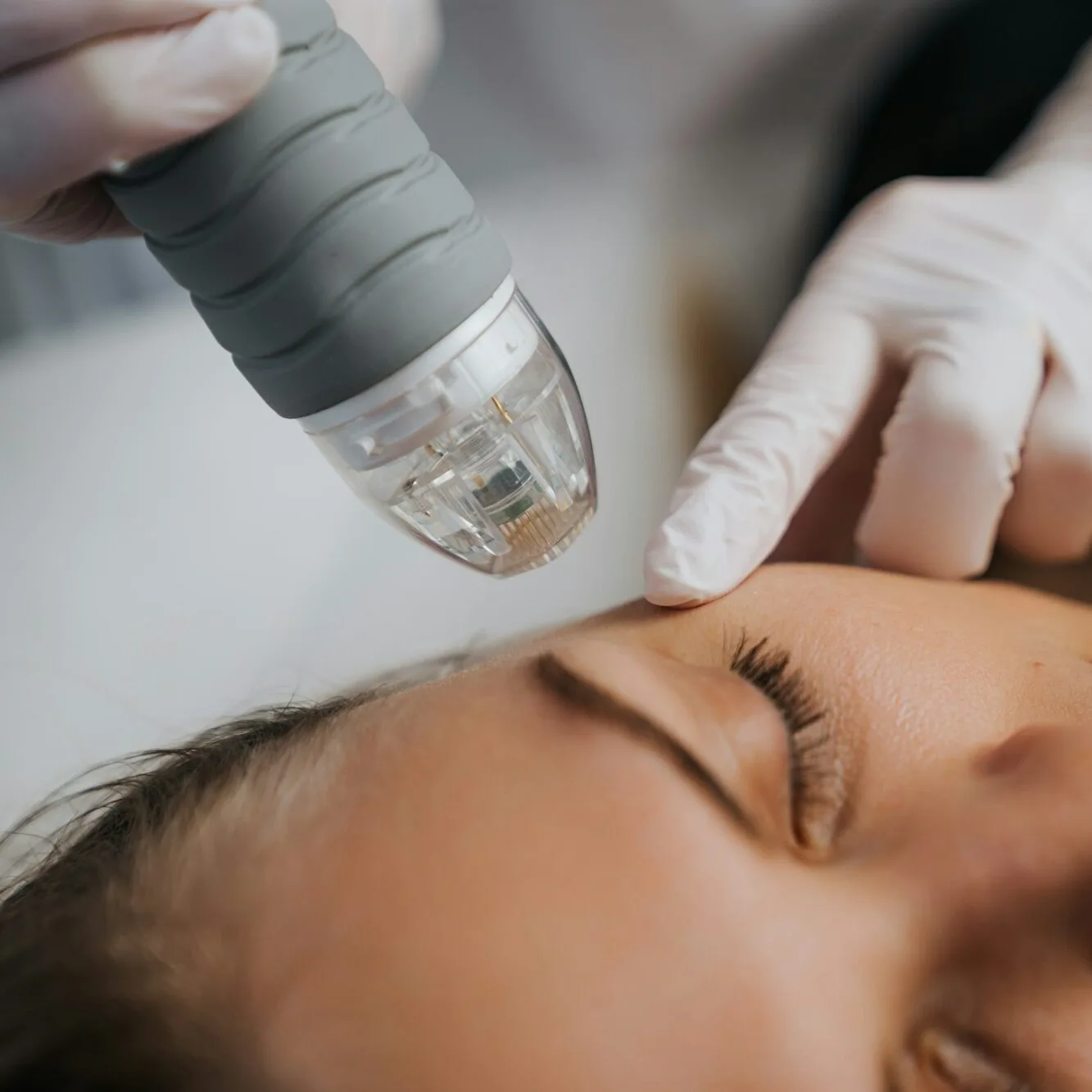
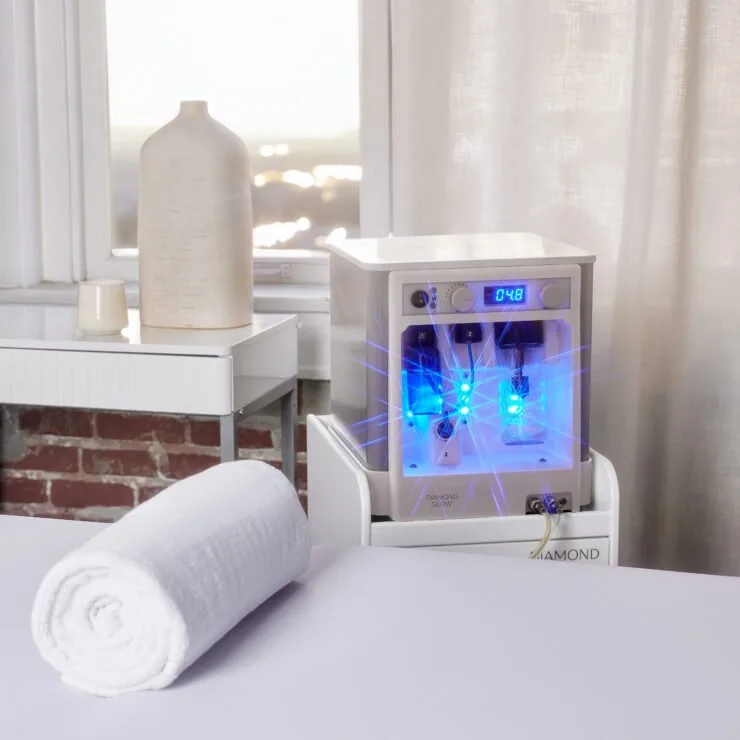
Three things happen through one handpiece: a diamond tip resurfaces, suction extracts, and a serum infuses into skin that was just cleared.
The parts that matter for summer:
No steam and no heat. Heat is a pigment trigger and a rosacea trigger. Traditional extraction relies on steam to soften and pressure to express. This does not.
No manual pressure. Suction instead of fingers, which means no bruising and no lingering redness around the nose and chin.
No downtime. You are slightly pink for maybe an hour. Makeup the same day is fine. You can go to a pool that afternoon.
Controlled intensity by area. Different grits let us go coarser on a congested nose and gentler along the jaw in the same pass.
Starts at $190.
Why add red light
Red light therapy after any treatment that creates mild inflammation helps it settle faster. That is the best supported application of photobiomodulation.
Practical effect: the pink phase is shorter, and any post-extraction irritation calms down instead of lingering into the evening.
Beyond that, red light supports collagen production over eight to twelve weeks of consistent use. In a month where you cannot do microneedling, that is the collagen work available to you.
No UV, no heat, no downtime. Ten to twenty minutes.
The stack
DiamondGlow, then red light, same appointment. Fifteen to twenty minutes in front of the panel with clean skin, no product, no sunscreen on the treated area.
Then sunscreen before you walk out the door, because it is July and the parking lot is 115.
Cadence
Every four weeks from June through September if you are congestion prone. That matches how fast congestion actually rebuilds under a full sunscreen load.
Red light three to four times a week if you have access, not just on treatment days. Frequency beats duration with red light and this is where a membership changes the math.
DiamondGlow at $190 plus red light at $40 per session adds up fast. The $149 monthly membership covers daily red light along with sauna, cold plunge, hot tub and compression.
What this stack does not do
It does not build meaningful collagen the way microneedling does. It refines the surface and supports the skin. Different job.
It does not treat acne scarring, deep lines, or laxity.
It will not remove sun spots.
If your goals are structural, the honest answer is to maintain through summer with this and start microneedling in October when the UV drops and you have a low-sun window to heal through. That sequence produces a better result than needling through July anyway.
Book the stack
Schedule a DiamondGlow and ask about adding red light to the same visit.