Arizona ages skin faster. Not an opinion, a UV dose problem. We run index 10 and 11 for months at a time and our winter still reaches 5 and 6.
The visible result is pigment: freckling that merged into patches, brown spots on the cheekbones and temples, and tone that is no longer one color.
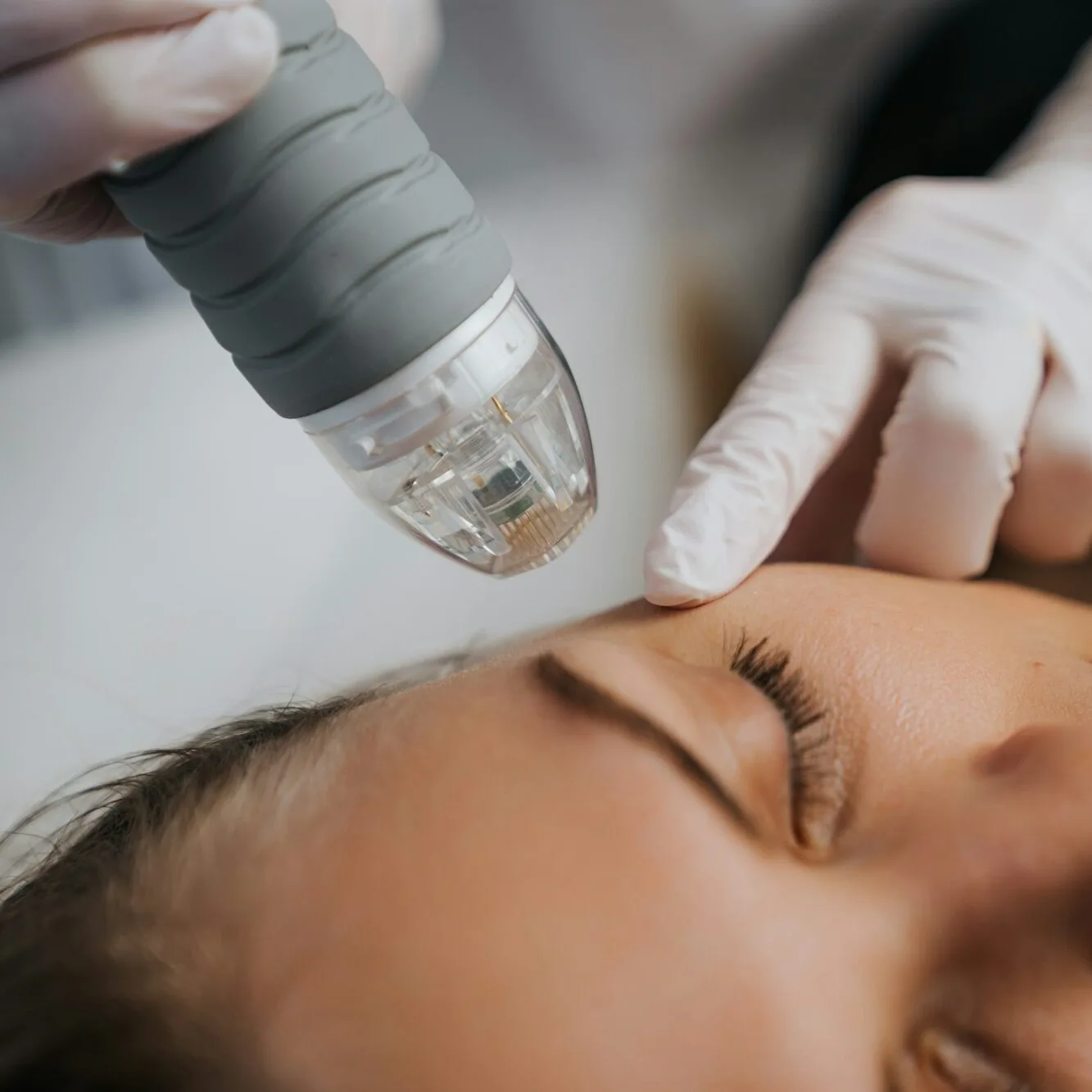
Here is what microneedling does about that, and what it does not.
What it actually helps
Overall tone and clarity. Increased cell turnover plus new collagen produces skin that looks more even, brighter and more uniform. This is real and it is the main benefit.
Texture from sun damage. Chronic UV degrades collagen and elastin, which is why sun damaged skin feels rougher and looks less resilient. Microneedling addresses that directly.
Product penetration. The channels allow pigment-suppressing actives to reach further, which is where a lot of the pigment result actually comes from.
Fine lines from photoaging. Yes, over a series.
What it does not do
It does not remove a discrete sun spot. A solar lentigo is a defined lesion and needling around it will not erase it.
For individual spots, you want IPL, a laser, or a targeted topical protocol. We will tell you that rather than sell you six sessions that will not solve the thing you came in about.
The melasma caution
If your pigment is melasma rather than sun spots, microneedling is a more delicate conversation.
Melasma is heat reactive as well as UV reactive. Any treatment that creates inflammation carries a risk of making it worse, and microneedling creates inflammation by design.
It can be done, carefully, with pre-treatment, lower depths, and a clear plan. It should not be done casually and it should not be done at all in a Phoenix summer.
Tell us if you have melasma or have been told you might. We will adjust or recommend against.
Why March is the deadline
Two reasons.
Healing needs low UV. Freshly needled skin exposed to strong sun risks post-inflammatory hyperpigmentation, which is the exact problem you came in to fix. April onward, the UV index here climbs fast.
A series takes months. Four sessions at five weeks apart is roughly five months. Start in March and you finish in August with results developing through fall. Start in May and you are needling through July, which we will generally advise against.
If it is already April and you are outdoors regularly, the honest advice is to wait until October and spend the summer on facials and pigment suppression at home.
What to pair it with
Daily sunscreen. Non-negotiable and it does more for pigment than anything on this list.
A pigment-suppressing topical. Whatever we recommend for your skin, used consistently. This is where the pigment result comes from. Microneedling improves delivery.
Antioxidants in the morning. Vitamin C under sunscreen.
A hat. Unglamorous and effective.
Realistic outcome
A series of four to six sessions plus consistent home care produces noticeably more even tone, better texture, and a real reduction in the diffuse pigmentation that makes skin look tired.
Discrete dark spots will still be there, lighter. Plan a different treatment for those.
Sessions start at $210.
Book before April
Schedule a microneedling consultation and we will tell you honestly whether to start now or wait for fall.