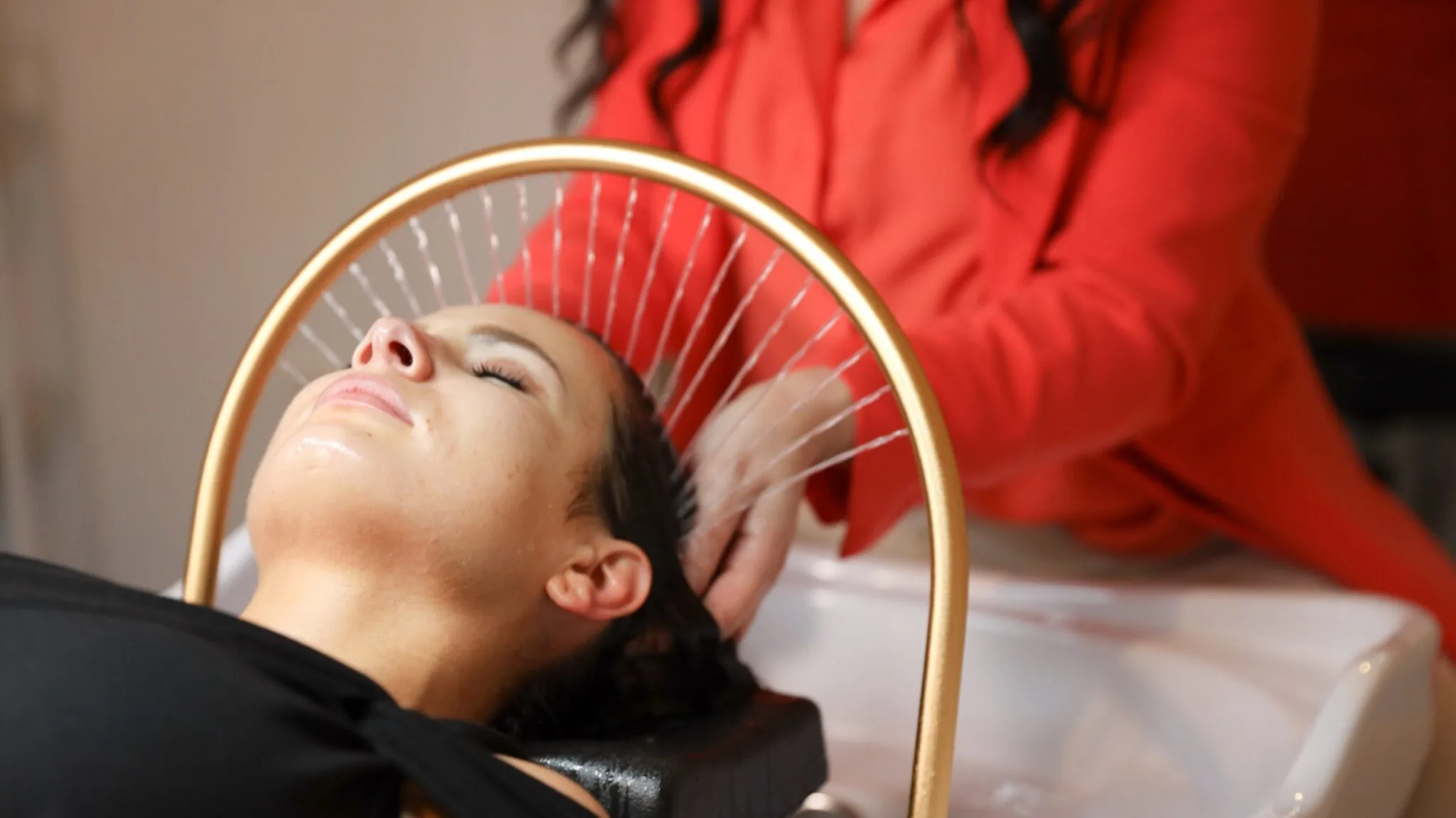
Somewhere around minute twenty, most people stop talking. By minute thirty, a good share are asleep.
Then they wake up at the end slightly embarrassed and apologize. Nobody needs to. It is the most predictable thing that happens in that room and it is worth understanding why.
The parasympathetic shift
Your autonomic nervous system runs in two broad modes. Sympathetic is alert, activated, ready. Parasympathetic is rest and digest.
Most people spend their days heavily weighted toward sympathetic. Phone, traffic, deadlines, notifications, the low hum of things unfinished.
Sustained gentle pressure, warmth, and rhythmic touch push the balance the other way. Heart rate drops, breathing slows, muscle tone decreases. That shift is what sleep requires, and once it happens, sleep tends to follow.
The specific inputs
Rhythmic touch. Repetitive, predictable pressure is one of the most reliable parasympathetic triggers there is. It is the same reason infants settle when rocked.
Warm water on the scalp. The scalp is densely innervated. Warm water plus pressure is a large volume of pleasant sensory input to a region that normally receives almost none.
Head support and horizontal position. You are reclined, supported at the neck, with no postural work to do. That alone drops muscular tension considerably.
Darkness and no visual demand. Eyes closed, dim room. A large portion of your brain's processing load goes offline.
No obligation to respond. For most people this is the biggest one. There is nothing to answer, nothing to decide, nowhere to be, and nobody expecting anything.
What it says about you
If you fall asleep within twenty minutes of lying down in the middle of a Tuesday, you are probably carrying more fatigue than you think.
Sleep latency in a relaxed environment is a rough signal. Falling asleep almost instantly typically means accumulated sleep debt.
That is not a diagnosis. It is worth noticing.
The June context
Phoenix in June does something specific to people. Sleep quality drops when overnight lows stay in the 80s and 90s. Air conditioning runs constantly. Nobody goes outside, so nobody gets much natural light exposure or movement.
By early summer, most of our clients are running a deficit and have not connected it to the season.
That is part of why our head spa bookings climb through the summer, and why more people fall asleep during them.
Should you fight it?
No. If you paid for an hour of parasympathetic activation and you got it, the treatment worked.
The scalp work continues regardless. You do not have to be conscious for it to be effective.
Some people want to stay awake for the experience. That is fine too. Tell us and we will chat, which keeps most people alert.
Practical notes
Tell us if you want quiet. Say it at the start. We will not take it personally and it makes a difference.
Book when you can go home after. The grogginess afterward is real and lasts twenty or thirty minutes.
Book late afternoon if sleep is your goal. The relaxation effect carries into the evening.
Skip the caffeine beforehand. Obvious and worth saying.
Ninety minutes if this is why you are coming. The extra thirty minutes is largely massage.
Sixty minute service starts at $130.
What it is not
It is not a treatment for insomnia or a sleep disorder. If you have chronic sleep problems, see a physician. Sleep apnea is common, underdiagnosed, and not something a spa addresses.
What this is: an hour where your nervous system gets to downshift, which most people do not otherwise schedule.
Book
Schedule a head spa in North Phoenix.