November in Phoenix is when everyone starts moving again. Race season, hiking season, the first outdoor rides that are not miserable.
It is also holiday travel season. Both produce the same complaint, which is legs that feel heavy, tight and vaguely swollen.
What the boots do
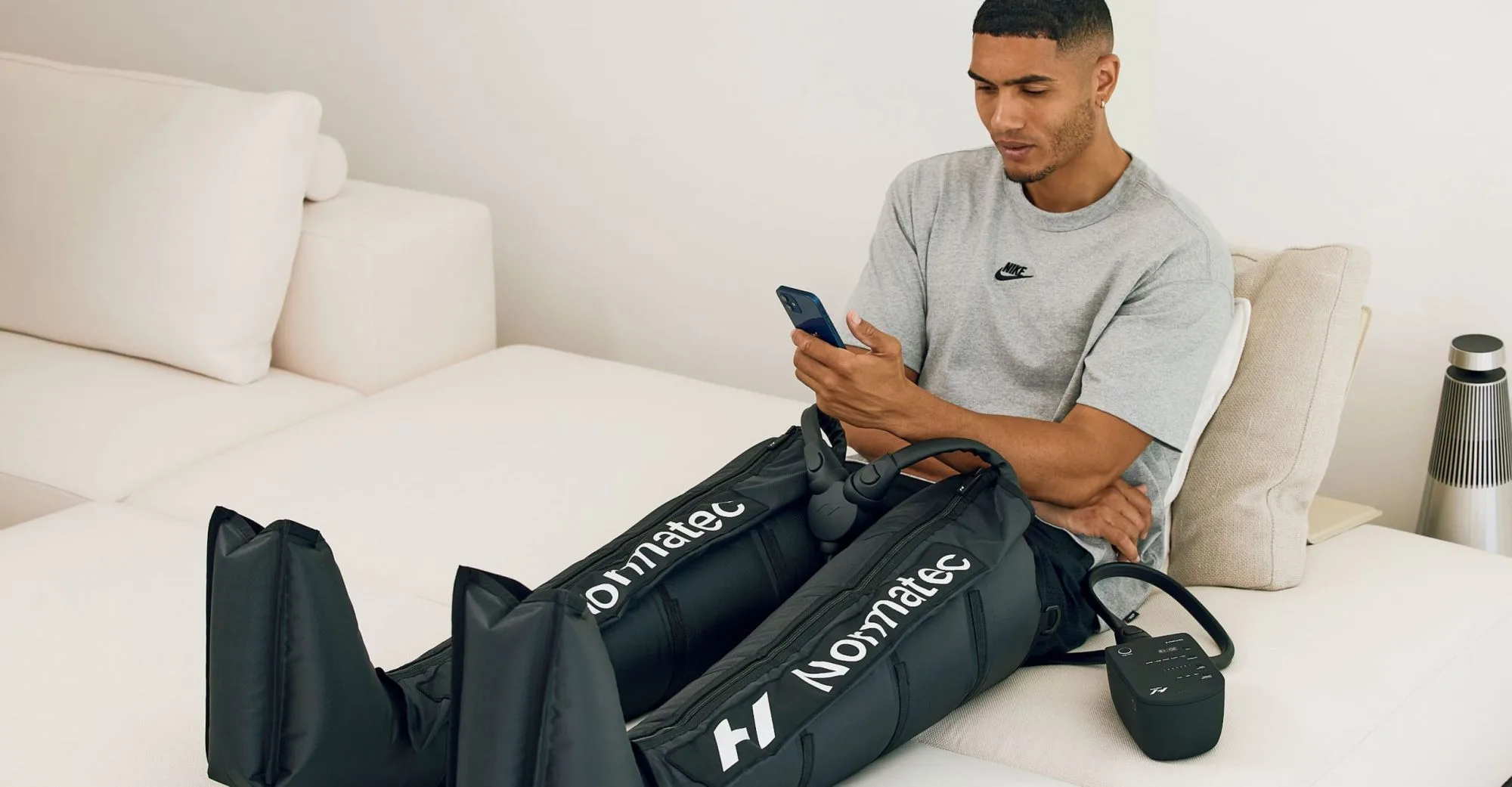
Pneumatic compression sleeves inflate in timed chambers, usually starting at the foot and moving up the leg in sequence.
That sequential pressure assists venous return and lymphatic drainage. Blood and lymph in your legs have to move uphill against gravity, and they rely on muscle contraction to do it. When you have been sitting on a plane for four hours or you just finished a long run and then stopped moving, that pump is not working.
The boots do the pumping for you.
What that gets you
Reduced swelling. The most reliable effect and the most immediately noticeable one.
Less perceived soreness. Evidence here is reasonable, particularly for delayed onset muscle soreness in the day or two after hard efforts.
The heavy leg feeling goes away. Hard to quantify, easy to feel.
What the research does not strongly support is meaningful improvement in actual performance markers on subsequent days. So: you will feel better, which matters, and you may not run faster tomorrow because of it.
That is an honest framing and it still makes it worth $40.
When to use it
After a long run or ride. Same day is ideal, within a few hours.
After a flight. Especially anything over three hours. Travel swelling is real and compression clears it fast.
On rest days. Legitimate use and arguably the best one.
After a long day standing. Nurses, servers, teachers, anyone on a jobsite. This is a big share of our compression clients and nobody talks about it.
During the taper before a race. Light sessions, not aggressive ones.
Session length
Twenty to thirty minutes at a moderate pressure setting is the sweet spot for most people.
Longer is not better. Sixty minutes at high pressure does not double the effect and it can leave your legs feeling oddly numb and tired.
Start at a lower pressure than you think you need. It should feel like firm squeezing, not like a blood pressure cuff someone forgot about.
Stacking it
Compression pairs well with heat. Infrared sauna first, then boots, is a good sequence.
It also pairs with assisted stretching. Compression handles fluid, stretching handles tissue length. Different problems.
Sessions start at $40. The $149 monthly membership includes daily compression along with sauna, cold plunge, hot tub and red light, which is the obvious choice if you are training regularly.
Who should not use it
Deep vein thrombosis or a history of blood clots. This is the important one. Compression can dislodge a clot and that is a medical emergency. If you have any clot history, ask your physician first, not us.
Also check first with: congestive heart failure, severe peripheral neuropathy, an open wound or infection on the legs, recent fracture, or acute injury with swelling that has not been evaluated.
If your leg swelling is new, one-sided, and painful, that is a doctor visit today, not a recovery session.
Book a session
Reserve compression therapy in North Phoenix.